The math doesn't add up to more POWER.
Please help me here.
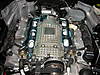
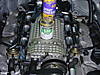
I love the looks of the NEW Needswings manifolds. But no matter how I write it up it still comes out the same, No Extra Power.
If I am wrong please chime in but please think first.
Blower = same amount of CFM
Mike
I would like to add a few points on this discussion, please.
Blower= same amount of cfm.
NO, the cfm are the result of the blower and its speed IN ADDITION TO THE PRESSURE DIFFERENCE IT IS OPERATING AT> With low restriction manifolds the discharge pressure at the s/c would be lower as the pressure at the s/c wye and manifold will be more similar, without the restrictive frictional losses, and the s/c would be able to flow more CFM. More importantly at high flow rates the manifold will be seeing higher pressures if the s/c pressure is not changed.
Larger pipes and manifolds = < LBS Pressure and < CFM @ initial WOT
If this means that the pressure falls at the s/c per the above item, yes. Again the restriction from the air cleaner to the inlet valve is the sum of all the elements that retard the airflow. The piston moves downward and the atmosphere plus blower serve to move a charge of air into the cyclinder to fill the void. Reducing the resistance anywhere assists in getting more to burn into the engine.
Please remember that I got 1 extra psig at the manifold body by adding a second inlet CAI pipe to my Needswings set up to COUNTERACT the friction in the 3" pipe. I was measuring 30 inches of water vacuum at my throttle body on the dyno with the standard CAI installation. That alone gave me about 35 HP at about 2500 rpm, 12 HP at 6000.
Intakes on heads are = to factory spec therefore = amount of CFM
All I can find as a positive is one will experiance slower kick in the butt dyno until system is at a full pressure which at that point will be equal to the original manifold power.
The improved manifolds allow more airflow and have a tiny larger volume to assist in stabilizing the pressure fluctuations during the intake cycle of any given cyclinder. This is beneficial at engine speeds; at only 3000 rpm each inlet cycle occures in 90 degrees of a power cycle or about 0.010 seconds, for four cycle engines. That time is for the valve to open, piston to travel down and ingest a charge and the valve to begin closing. THats about 5 milliseconds at top rev!!!!!!!!!!! Restriction means something at thoes speeds.
Isn't it so, that until the intake on the heads themselves are inlarged to and at the same ratio as the New manifolds tubes, due to the increased volume they can only cause a miniscule stall?
I have ported the intake portion of the heads( 4 hours) and gained oodles of power by matching the manifolds and heads to the outline of the intake gaskets in an earlier post. I has 338 HP before I did a pulley with just an exhaust delete, CAI with one pipe and gasket matching of the head/manifold.
The fact that the intake can provide more air ( due to lower internal friction) will not promote a stall, quite the opposite. The larger volume increase will take longer to charge, but the higher flow rate will more than offset the difference.
Noteworthy is that the super charger will flow more air as its discharge pressure is lower due to both factors. IF the throttle is opened for more than 1/2 second, you will see a gain. Please note that the throttle takes that long to open as you DO NOT OPEN THE THROTTLE< THE COMPUTER DOES> and without a sprint booster you would not see that on a data logger like my Xeitronix. FYI when your car shifts the throttle CLOSES a goodly amount to soften the shift loads on the transmission. Bet you all never thought that did ya?
Its all good, I just had to comment on the discussion and illuminate some of the finer points, ENJOY. W Dy
Dy