Originally Posted by sonoronos
I saw a few of these wicked looking 'vettes at a Corvette show in Manassas today. Does anyone know specifics about the years this particular kind of 'vette was made? I thought they were the best looking cars there. They remind me of the 300SL somewhat.
Those look like L88's.
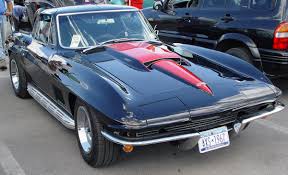 L88, the king
As an option code on the 1967 to 1969 models, L88 was an almost secret offering. Chevrolet actively discouraged L88 orders from
dealerships and the public. Just what was all the fuss about? The L88 was capable of 170 mph and sported more than 500 horsepower. This homologation special was developed for the track and never intended for the road.
The L88 was first offered to teams such as Sunray DX Motorsports who contested Corvettes in events such as the Sebring and Daytona. Packed with factory competition hardware the L88 package was an ordering option that made the Corvette a pure race car. It is quite remarkable that some customers had the insight to order this hush-hush package on their street machines, and more so, GM was willing to comply. Luckily, over 200 L88s were ordered, and they each represent the ultimate road going Corvette.
At the heart of the L88 package was a 427 similar only in block casting to the engine first offered in 1966. After two years of development, almost every other component was reconsidered for power and racing endurance. This was not the case with the L71 package which GM was advertising and more willing to sell.
At almost half the price of the L88 engine, the L71 officially appeared to offer the same performance at a marked discount. However, GM was fudging the numbers to keep the L88s off the road, making the L88 essentially the hidden, more potent, option. The L88 even donned a warning sticker on the center console that emphasized only racing fuel was adequate for the large valves and radical timing. Furthermore, interior options such as air conditioning, a heater/defroster system and a radio were were not available.
In detail the L71 and L88 Corvettes were very different machines. One was raced, the other was driven. While the L71 and L88 shared the same displacement, L88's took the big-block theme a step further by adding a strengthened crankshaft, 12.5:1 pistons, cold air induction and a 850 CFM dual feed Holley carburetor. As with any racing machine, the L88 left out the fan shroud, choke and often, the heating system. With it's exhaust removed, and running on racing fuel, the L88 was capable to 600 horsepower which was more then enough to take class victory at the 1967 Sebring 12 Hours. On the road, and far above GMs 435 bhp figure, the L88 can claim anywhere from 550 to 570 horsepower in production trim.
Filling out the package, the L88 included much more than just an engine upgrade. Mandatory factory upgrades included a Muncie M22 Rock Crusher or M20 Hydramatic Transmission., power-assisted, heavy duty brakes, heavy duty
coil springs and dampers, G81 positraction differential and special cowl induction hood. After all was said and done the the L88 doubled the price of a standard Corvette, but more than doubled its potential or resale.
L88s were produced from 1967 to 1969 and during the transition from the C2 Stringray to the C3 body style. As a limited series of around 200 cars, the L88 was sold in both
coupe and convertible form. The rarest cars are 20 1967 L88 Corvettes. Due to stringent emissions standards, the L88 was forced to be canceled in 1969.
Story by Richard Owen