


Got my dyno run


Thread Starter
|
Senior Member
Joined: Feb 2008
Posts: 4,508
Likes: 34
From: VA

 Got my dyno run
I got to run my car on the dyno at the Carlisle car show. For $80 you got to do two runs with results.
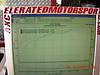
Iam happy to say that the results were as good as I had hoped. You can examine the torque and horse power as it is clear enough to see. What I was striving for and feel so good about is the Fuel / Air ratio that I was able to achieve with the NO TUNE controller that modulates the fuel rail pressure.
This has been in development for a while and netted me the best power to date. Next week I will be doing the manifold swap to see if the gains can be extended even more. The F/A ratio is almost ideal and is dynamically corrected as the car runs. Note that the line is flat at about 12.6 or 12.7 to 1.0.
The charts are curves and the numerical data back up to allow full evaluation. If you look closely you can see the air parameters on the chart as well as the other data points. It was a hoot and the dyno operators enjoyed doing the first Crossfire on that rig.
More data later, but for now I have a grin. THe pressure is now on to reproduce this design reliabily so that anyone can have their F/A mixture be tunable with a simple laptop and have that ratio be maintained over atmospheric changes in conditions such as heat and density.
Enjoy the weekend, WOODY
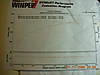
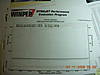
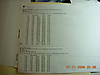
BTW the dotted line is to show the "IDEAL" f/a mixture as a reference............Oh and TAAAADAAAA
Iam happy to say that the results were as good as I had hoped. You can examine the torque and horse power as it is clear enough to see. What I was striving for and feel so good about is the Fuel / Air ratio that I was able to achieve with the NO TUNE controller that modulates the fuel rail pressure.
This has been in development for a while and netted me the best power to date. Next week I will be doing the manifold swap to see if the gains can be extended even more. The F/A ratio is almost ideal and is dynamically corrected as the car runs. Note that the line is flat at about 12.6 or 12.7 to 1.0.
The charts are curves and the numerical data back up to allow full evaluation. If you look closely you can see the air parameters on the chart as well as the other data points. It was a hoot and the dyno operators enjoyed doing the first Crossfire on that rig.
More data later, but for now I have a grin. THe pressure is now on to reproduce this design reliabily so that anyone can have their F/A mixture be tunable with a simple laptop and have that ratio be maintained over atmospheric changes in conditions such as heat and density.
Enjoy the weekend, WOODY
BTW the dotted line is to show the "IDEAL" f/a mixture as a reference............Oh and TAAAADAAAA
Last edited by waldig; Jul 11, 2009 at 09:57 PM.

Senior Member
Joined: Aug 2008
Posts: 5,741
Likes: 98
From: Sierra Vista, Arizona
 Re: Got my dyno run
Dang Woody you nearly painted that dotted line!
Are you working on something that the rest of us will be able to get?
I gotta get mine on a dyno someday. Currently seeing 11.2 or so AFR at top of third gear. Guess its better to be rich than lean (on the roadster w/192 pulley).
Are you working on something that the rest of us will be able to get?
I gotta get mine on a dyno someday. Currently seeing 11.2 or so AFR at top of third gear. Guess its better to be rich than lean (on the roadster w/192 pulley).

Forum Regular
Joined: Apr 2008
Posts: 888
Likes: 1
From: St. Louis, MO
Re: Got my dyno run
Your in the same boat as me 10.8 to 11.2 at redline. From everything i have read though 12.7 seems high for higher boosted applications, but i gues if the computer isn't pulling timing and the car is runing good no harm done  .
.
.

Senior Member

Joined: Dec 2007
Posts: 1,366
Likes: 1
From: Mn
Re: Got my dyno run
Wldig,
Good numbers on the AFR, I know you have been chasing that control for a while.
Have you noticed a difference in temp readings?
Real world performance?
By holding the AFR higher, you should generate less heat in the motor, especially when pushing it hard.
Good numbers on the AFR, I know you have been chasing that control for a while.
Have you noticed a difference in temp readings?
Real world performance?
By holding the AFR higher, you should generate less heat in the motor, especially when pushing it hard.
Thread Starter
|
Senior Member
Joined: Feb 2008
Posts: 4,508
Likes: 34
From: VA
Re: Got my dyno run
There are no issues with heat as it does not affect the normal operation - only wide open throttle WOT operation requires it.
Real world performance is improved when you are pushing it, the upper range power is noticable. This is with the 185 pulley and the dual inlet CAI. I will be putting the much polished and long worked up manifolds on shortly for testing now that the baseline has been recorded.
More photos of the test are listed below. With my laptop I can now up or lower the desired set point of the f/a curve. You set the desired range and it holds that value as much as it can. You dont have to tweek each injector fuel "bin", your setting the computer f/a goal point with a few key strokes.
Enjoy, Woody


YES this is for every crossfire with or without the s/c. It uses a wideband f/a sensor and fuel pressure regulator..................off the shelf.
Real world performance is improved when you are pushing it, the upper range power is noticable. This is with the 185 pulley and the dual inlet CAI. I will be putting the much polished and long worked up manifolds on shortly for testing now that the baseline has been recorded.
More photos of the test are listed below. With my laptop I can now up or lower the desired set point of the f/a curve. You set the desired range and it holds that value as much as it can. You dont have to tweek each injector fuel "bin", your setting the computer f/a goal point with a few key strokes.
Enjoy, Woody
YES this is for every crossfire with or without the s/c. It uses a wideband f/a sensor and fuel pressure regulator..................off the shelf.
Last edited by waldig; Jul 13, 2009 at 04:38 PM.
Senior Member
Joined: Aug 2008
Posts: 5,741
Likes: 98
From: Sierra Vista, Arizona
Re: Got my dyno run
Originally Posted by waldig
YES this is for every crossfire with or without the s/c. It uses a wideband f/a sensor and fuel pressure regulator..................off the shelf.
Now that's some good news!

 Squirrel Crusher

Thread
Thread Starter
Forum
Replies
Last Post
Wisconsinfdcrossfire
Engine, Exhaust, Transmission and Differential
3
Sep 20, 2015 10:04 PM
Currently Active Users Viewing This Thread: 1 (0 members and 1 guests)