


2015 Corvette Z06: Only a 1.7 liter TVS Supercharger!


Thread Starter
|
Forum Regular
Joined: Jan 2011
Posts: 528
Likes: 0
 2015 Corvette Z06: Only a 1.7 liter TVS Supercharger!
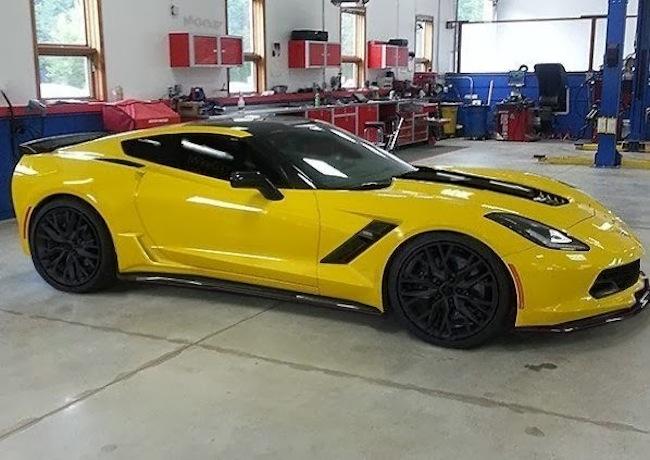
Pulling the Covers off of the 2015 Corvette Z06 and C7.R
Alrights guys. Intervention talk. Chevrolet is somehow pumping 625 HP out of a 1.7 liter Eaton TVS supercharger on the 2015 Z06.
I think we can do better than the 400-some-odd HP most of us are getting out of the 1.6 liter twin-screw supercharger in the SRT6/AMG cars. Time to step it up.
I dyno'd 360 RWHP (~430 crank HP by my reckoning). So I'm in the same boat.
Thread Starter
|
Forum Regular
Joined: Jan 2011
Posts: 528
Likes: 0
Re: 2015 Corvette Z06: Only a 1.7 liter TVS Supercharger!
I realize that he meant engine displacement. I meant: "yes, larger engine, but hardly larger supercharger."
I will explain myself better: Before the C7 Z06 intro, I might have said that I didn't think a supercharger that small (1.6, 1.7 range) could move enough air to make 625 HP. But now Chevy has proven that it can. That's a lot of air, and a lot of supercharger RPM. Trying to make 625 HP with a supercharger that size and a smaller engine only complicates matters with the subsequent higher pressure ratio, inake temperature, cylinder pressure, stress on parts, etc.
But still, 330/349 HP and 625 HP are worlds apart, and I was saying we ought to be able to get closer. I meant it as much as motivation as for technical arguement.
I will explain myself better: Before the C7 Z06 intro, I might have said that I didn't think a supercharger that small (1.6, 1.7 range) could move enough air to make 625 HP. But now Chevy has proven that it can. That's a lot of air, and a lot of supercharger RPM. Trying to make 625 HP with a supercharger that size and a smaller engine only complicates matters with the subsequent higher pressure ratio, inake temperature, cylinder pressure, stress on parts, etc.
But still, 330/349 HP and 625 HP are worlds apart, and I was saying we ought to be able to get closer. I meant it as much as motivation as for technical arguement.

Senior Member
Joined: May 2011
Posts: 2,192
Likes: 24
From: Ridgecrest, CA
Re: 2015 Corvette Z06: Only a 1.7 liter TVS Supercharger!
I realize that he meant engine displacement. I meant: "yes, larger engine, but hardly larger supercharger."
I will explain myself better: Before the C7 Z06 intro, I might have said that I didn't think a supercharger that small (1.6, 1.7 range) could move enough air to make 625 HP. But now Chevy has proven that it can. That's a lot of air, and a lot of supercharger RPM. Trying to make 625 HP with a supercharger that size and a smaller engine only complicates matters with the subsequent higher pressure ratio, inake temperature, cylinder pressure, stress on parts, etc.
But still, 330/349 HP and 625 HP are worlds apart, and I was saying we ought to be able to get closer. I meant it as much as motivation as for technical arguement.
I will explain myself better: Before the C7 Z06 intro, I might have said that I didn't think a supercharger that small (1.6, 1.7 range) could move enough air to make 625 HP. But now Chevy has proven that it can. That's a lot of air, and a lot of supercharger RPM. Trying to make 625 HP with a supercharger that size and a smaller engine only complicates matters with the subsequent higher pressure ratio, inake temperature, cylinder pressure, stress on parts, etc.
But still, 330/349 HP and 625 HP are worlds apart, and I was saying we ought to be able to get closer. I meant it as much as motivation as for technical arguement.
I can't find concrete valvetrain info but some were saying it's based on the pushrod which makes me think that there is something major going on somewhere in that engine to produce the numbers they claim. Even 2 BIG valves won't flow like a 4 valve, it won't injest like a 3 valve either. There are a million variables though. What is their bore and stroke?

Senior Member
Joined: Oct 2013
Posts: 2,152
Likes: 37
From: Orlando
Re: 2015 Corvette Z06: Only a 1.7 liter TVS Supercharger!
Just to be silly a current Chrysler DOHC turbo 3.0 peaks at 420 lb-ft of torque. Applying the same numbers to the Corvette curves would result in 842 hp at 6,000 rpm.
Thread Starter
|
Forum Regular
Joined: Jan 2011
Posts: 528
Likes: 0
Re: 2015 Corvette Z06: Only a 1.7 liter TVS Supercharger!
The new LT1/LT4 motors are based on the LS3 smallblock, just with cylinder deactivation, direct injection, and efficiency improvements like that. So, yes, definitely still 2-valve pushrod heads. The LS9 in the C6 ZR1 (same engine essentially as the LT4) made more HP (638)
Thread Starter
|
Forum Regular
Joined: Jan 2011
Posts: 528
Likes: 0
Re: 2015 Corvette Z06: Only a 1.7 liter TVS Supercharger!
Actually Tadge Juechter, Corvette Chief Engineer, was answering questions over on Jalopnik today and the possibility of turbos was one question that came up. Basically, he said they looked at it and they won't fit.
Senior Member
Joined: May 2011
Posts: 2,192
Likes: 24
From: Ridgecrest, CA
Re: 2015 Corvette Z06: Only a 1.7 liter TVS Supercharger!
Well, if your crank estimate is right then you are ~34 more hp/L. I think that is honestly pretty good. Plus that's what they get running early 1900's technology in a modern car  lol
lol
lol


Thread Starter
|
Forum Regular
Joined: Jan 2011
Posts: 528
Likes: 0
Re: 2015 Corvette Z06: Only a 1.7 liter TVS Supercharger!
I've told the Honda boys for years that HP/liter doesn't win races though. Ft-lb/lb sure seems to though!
Senior Member
Joined: Oct 2013
Posts: 2,152
Likes: 37
From: Orlando
Re: 2015 Corvette Z06: Only a 1.7 liter TVS Supercharger!
That CLA45 is interesting mainly for the "Compression ratio dips to 8.6:1 to suit the 26.1 psi " which means an effective compression ratio of about 15.6:1, diesel territory. At that level you really do not need a spark plug but direct injection (only way to avoid detonation) and a very stout bottom end is a must.
So what you have is a responsive small gas engine for good mpg at part throttle and the torque of a TD engine at full chat.
Drag of a 2 liter, part throttle torque of a 2.3 and max of a 3.6 the real change is that while the spark plug can be offset a bit in the chamber, the injector nozzle must be in the center so need a 4 valve head.
Also the head needs to be optimized for exhaust rather than intake but that is easy for an inline engine.
Just some thoughts.
So what you have is a responsive small gas engine for good mpg at part throttle and the torque of a TD engine at full chat.
Drag of a 2 liter, part throttle torque of a 2.3 and max of a 3.6 the real change is that while the spark plug can be offset a bit in the chamber, the injector nozzle must be in the center so need a 4 valve head.
Also the head needs to be optimized for exhaust rather than intake but that is easy for an inline engine.
Just some thoughts.

Senior Member
Joined: Mar 2008
Posts: 14,605
Likes: 38
From: IN
 Re: 2015 Corvette Z06: Only a 1.7 liter TVS Supercharger!
I sold the last vette because I was so afraid of breaking something on an already expensive car. I have had Chevy's for years, either vettes or Camaros. I get a lot more enjoyment out of the 2 cars I have now over the ole' ZO6 any day. There are some things I miss about it, the stick for one, but now that we have found some more HP, and soon some new gearing and tranny mods, I think the vette is a thing of the past. NOW, if someone were to just give me a ZL-1.......but I like the XF's for playing now. Last Vette reunion I went to, there must have been 1500 vettes there. You don't see that many SRT6 at XF events. I like the rarity of the 6's. And the fact no one seems to know anything about them. An old vette club buddy of mine didn't even know they existed. So, supercharged, 635 hp or not, I like what I have. Lingenfelter sure is tempting at times though...lol
Senior Member
Joined: Oct 2013
Posts: 2,152
Likes: 37
From: Orlando
Re: 2015 Corvette Z06: Only a 1.7 liter TVS Supercharger!
My "Corvette period" was 1970-75 when I raced a 63 FI coupe in B/P, & had a number of vette's and even had a Rochester FI in a Camaro. Have always had a V8 in something but really prefer sixes.
Now that I took a sawzall to the interior, my coupe is comfortable and has plenty of HP but really needs a 2.60 rear end to make 1st useable and 6th a functional o/d.
If I ever get a reason or find one with a blown engine suspect a Pentastar transplant may be in the future - really like the one in my tow car.
Now that I took a sawzall to the interior, my coupe is comfortable and has plenty of HP but really needs a 2.60 rear end to make 1st useable and 6th a functional o/d.
If I ever get a reason or find one with a blown engine suspect a Pentastar transplant may be in the future - really like the one in my tow car.
Senior Member
Joined: May 2011
Posts: 2,192
Likes: 24
From: Ridgecrest, CA
Re: 2015 Corvette Z06: Only a 1.7 liter TVS Supercharger!
I'm the opposite, only ever had a 427 in a '86 diesel F250 and I will never own a diesel again. I hated V8's after that too, but had no idea how a gas V8 was worlds different. Always 4's and the V6 xfire, which was amazing for what it was but said... nope, torque please.

