


Replaced fuel pump: no more hard starting, still hesitant at idle, and some notes.


Thread Starter
|
Forum Regular
Joined: Jul 2008
Posts: 392
Likes: 0
From: Tucson, AZ
 Replaced fuel pump: no more hard starting, still hesitant at idle, and some notes.
2005 srt6 was purchased a month ago with 26K miles on it.
Replaced fuel pump with new pump off EBay from 'mr.fuelpump'. Its the same pump used across many mercedes models, more specifically I found it by searching for slk320 fuel pump, it was $160 vs Mercedes $330ish. Not cheap, but if you have $$$ to spare its a good attempt at fixing a relevant problem.
Problem fixed: Hard to start car after it sits awhile. This is because our fuel pumps have pressure valves built in. If the valve is bad then the fuel system loses pressure the longer it sits. The pump is strong enough to refill the lines when you turn the ignition, but if it lost too much pressure then you might be cranking for 4-5 seconds. My car now starts in about a second. Also, the loud whine from the previous pump on startup, as it filled the system with fuel, is gone and the new pump just gives a quick half second buzz.
Problem not fixed: A feeling of mis-fire while sitting at a stop light. The car seems to 'miss' a little while sitting at a stop light. This could be a wide variety of things. I was hoping the pump fixed it. No. Keep in mind the RPMs are stable at idle, but theres definately a miss that shakes the car slightly.
Keep in mind it was probably just the pressure valve that was bad, and not the actual pump, so that explains why my startup issue is solved but the hesitation is not. That problem is probably due to something electrical maybe, like spark plugs?
Notes on replacement:
Skilled time: 1 hour
Realistic time: 2 hours
If you're careful and just relaxing because you have a day to waste: 3 hours <-- I suggest this, as working on the fuel system can feel stressful at times.
Have new clamps ready. I wish I had sizes to give you. The old clamps seem like one-use spring type clamps. You'll want new ones. The two hoses involved are different sizes. I bought a few packs of different sizes from checker auto parts. Micro 4 or 6 will fit the smaller hose, and slightly larger will fit the larger hose.
General steps to follow and things to watch out for:
1. Drive rear-tires up ramps. Maybe jack stands are fine, but you'll be full-body under the car and I prefer ramps over jack stands. (Which makes no sense because I think stands are more stable than my autozone rhino ramps, but whatever) The front does not need to be lifted.
2. Unplug negative battery terminal. (Sure, no power is sent to the pump while the car is off, but the fuel system can be a nervous thing to work with. Play it safe)
3. Locate splash shield that covers fuel pump and fuel filter. Its a grey/black sheild in front of the passenger rear tire, underneath the car of course. Just knowing that should make you see it immediately.
4. Remove front 2 nuts off of splash sheild. You should be able to just bend the shield down and not remove the rear 2 bolts/nuts. I would've loved to just remove all bolts/nuts but I couldn't reach the rear 2. (If you choose to just bend the shield, then your best angle of attack is to slide in from the rear of the car, on your back)
5. Pull back two rubber 'boots' covering the positive and negative connections. Under these boots squeeze in sockets to un-do the nuts holding the connections. The positive nut is slightly smaller than the negative nut. Don't lose the locking washers when they fall out.
6. Clamp the two fuel lines. You have a line going into the pump on the driver's side of the pump. This line comes from straight above, about 12 inches above, straight from the fuel tank. On the passenger side of the pump you have the outlet hose which goes straight to the fuel filter. Clamp them FULLY. But, don't damage them. I used plier clamps with some cardboard wrapped around the fuel line so I could fully clamp without damaging the lines. But please do make sure you fully clamp because I messed up the first time and was drowning in fuel. Don't over-estimate your clamping skills. Make sure you do this part right. ESPECIALLY for the line going into the pump from the tank. It will pour if you don't get it fully clamped.
7. With the electrical removed and the hoses clamped, now loosen the bracket for the pump. Use a normal phillips screw driver and, from below, point it up in between the fuel pump and fuel filter and loosen a screw in the bracket. This screw is for both the pump and filter's mounting, same bracket. Keep in mind you can remove the screw all the way but in the end its only meant to loosen the bracket, not fully open it, as the only way to remove the items is to slide them out rather than open the bracket completely.
8. Now use a really small flathead screwdriver, or knife, or whatever is thin and hard, and pop open the stock hose clamps on each side of the fuel pump. Easier said than done, but thats all I can give you. Move them out of the way, or cut them off, but you're using new clamps afterwards.
9. Now the danger. Slide the hoses off of the fuel pump. Pray you clamped them correctly so gas doesn't pour out. Obviously you'll get a little gas since theres some in the pump, but trust me you'll know if you messed up. Remove the outlet hose first. You can probably point this hose up afterwards to make sure not too much gas spills out. Now, danger danger, remove the inlet hose.
Heres the deal! The inlet hose is fed from above so gravity is working against you. No opening the gas cap, pulling fuses and relays, starting the engine etc can stop this or even affect it. If you allowed any room for fuel to slip by during your clamping then the gravity will quickly cause fuel to pour out when the hose is removed. This is why you removed the outlet hose first, and why you loosened the mounting bracket first, because if you find fuel to be pouring out of the inlet hose when you remove it then quickly slide the stock pump to the left, out of the bracket, slide the new pump into the bracket, and quickly pop the inlet hose onto it. This will stop the pourage, and you can calmy put the outlet hose on now. This sliding out of the old pump, sliding in of the new pump, and popping on of the inlet hose should only take 3 - 5 seconds, so have everything ready so the disaster ends quickly.
10. The worst part is over. Now bend your new clamps so you can get them over the hoses, and clamp them.
11. Making sure any spilled fuel is evaporated, reinstall the two electrical terminals.
12. Reinstall the screw for the bracket and tighten.
13. Hate yourself for not just doing the fuel filter at the same time.
14. Reconnect battery, move everything out from under the car.
Hopefully someone finds this helpful.
Replaced fuel pump with new pump off EBay from 'mr.fuelpump'. Its the same pump used across many mercedes models, more specifically I found it by searching for slk320 fuel pump, it was $160 vs Mercedes $330ish. Not cheap, but if you have $$$ to spare its a good attempt at fixing a relevant problem.
Problem fixed: Hard to start car after it sits awhile. This is because our fuel pumps have pressure valves built in. If the valve is bad then the fuel system loses pressure the longer it sits. The pump is strong enough to refill the lines when you turn the ignition, but if it lost too much pressure then you might be cranking for 4-5 seconds. My car now starts in about a second. Also, the loud whine from the previous pump on startup, as it filled the system with fuel, is gone and the new pump just gives a quick half second buzz.
Problem not fixed: A feeling of mis-fire while sitting at a stop light. The car seems to 'miss' a little while sitting at a stop light. This could be a wide variety of things. I was hoping the pump fixed it. No. Keep in mind the RPMs are stable at idle, but theres definately a miss that shakes the car slightly.
Keep in mind it was probably just the pressure valve that was bad, and not the actual pump, so that explains why my startup issue is solved but the hesitation is not. That problem is probably due to something electrical maybe, like spark plugs?
Notes on replacement:
Skilled time: 1 hour
Realistic time: 2 hours
If you're careful and just relaxing because you have a day to waste: 3 hours <-- I suggest this, as working on the fuel system can feel stressful at times.
Have new clamps ready. I wish I had sizes to give you. The old clamps seem like one-use spring type clamps. You'll want new ones. The two hoses involved are different sizes. I bought a few packs of different sizes from checker auto parts. Micro 4 or 6 will fit the smaller hose, and slightly larger will fit the larger hose.
General steps to follow and things to watch out for:
1. Drive rear-tires up ramps. Maybe jack stands are fine, but you'll be full-body under the car and I prefer ramps over jack stands. (Which makes no sense because I think stands are more stable than my autozone rhino ramps, but whatever) The front does not need to be lifted.
2. Unplug negative battery terminal. (Sure, no power is sent to the pump while the car is off, but the fuel system can be a nervous thing to work with. Play it safe)
3. Locate splash shield that covers fuel pump and fuel filter. Its a grey/black sheild in front of the passenger rear tire, underneath the car of course. Just knowing that should make you see it immediately.
4. Remove front 2 nuts off of splash sheild. You should be able to just bend the shield down and not remove the rear 2 bolts/nuts. I would've loved to just remove all bolts/nuts but I couldn't reach the rear 2. (If you choose to just bend the shield, then your best angle of attack is to slide in from the rear of the car, on your back)
5. Pull back two rubber 'boots' covering the positive and negative connections. Under these boots squeeze in sockets to un-do the nuts holding the connections. The positive nut is slightly smaller than the negative nut. Don't lose the locking washers when they fall out.
6. Clamp the two fuel lines. You have a line going into the pump on the driver's side of the pump. This line comes from straight above, about 12 inches above, straight from the fuel tank. On the passenger side of the pump you have the outlet hose which goes straight to the fuel filter. Clamp them FULLY. But, don't damage them. I used plier clamps with some cardboard wrapped around the fuel line so I could fully clamp without damaging the lines. But please do make sure you fully clamp because I messed up the first time and was drowning in fuel. Don't over-estimate your clamping skills. Make sure you do this part right. ESPECIALLY for the line going into the pump from the tank. It will pour if you don't get it fully clamped.
7. With the electrical removed and the hoses clamped, now loosen the bracket for the pump. Use a normal phillips screw driver and, from below, point it up in between the fuel pump and fuel filter and loosen a screw in the bracket. This screw is for both the pump and filter's mounting, same bracket. Keep in mind you can remove the screw all the way but in the end its only meant to loosen the bracket, not fully open it, as the only way to remove the items is to slide them out rather than open the bracket completely.
8. Now use a really small flathead screwdriver, or knife, or whatever is thin and hard, and pop open the stock hose clamps on each side of the fuel pump. Easier said than done, but thats all I can give you. Move them out of the way, or cut them off, but you're using new clamps afterwards.
9. Now the danger. Slide the hoses off of the fuel pump. Pray you clamped them correctly so gas doesn't pour out. Obviously you'll get a little gas since theres some in the pump, but trust me you'll know if you messed up. Remove the outlet hose first. You can probably point this hose up afterwards to make sure not too much gas spills out. Now, danger danger, remove the inlet hose.
Heres the deal! The inlet hose is fed from above so gravity is working against you. No opening the gas cap, pulling fuses and relays, starting the engine etc can stop this or even affect it. If you allowed any room for fuel to slip by during your clamping then the gravity will quickly cause fuel to pour out when the hose is removed. This is why you removed the outlet hose first, and why you loosened the mounting bracket first, because if you find fuel to be pouring out of the inlet hose when you remove it then quickly slide the stock pump to the left, out of the bracket, slide the new pump into the bracket, and quickly pop the inlet hose onto it. This will stop the pourage, and you can calmy put the outlet hose on now. This sliding out of the old pump, sliding in of the new pump, and popping on of the inlet hose should only take 3 - 5 seconds, so have everything ready so the disaster ends quickly.
10. The worst part is over. Now bend your new clamps so you can get them over the hoses, and clamp them.
11. Making sure any spilled fuel is evaporated, reinstall the two electrical terminals.
12. Reinstall the screw for the bracket and tighten.
13. Hate yourself for not just doing the fuel filter at the same time.
14. Reconnect battery, move everything out from under the car.
Hopefully someone finds this helpful.
Last edited by ohnoesaz; Aug 23, 2008 at 01:55 PM.

Joined: Sep 2007
Posts: 217
Likes: 0
From: Los Angeles
Re: Replaced fuel pump: no more hard starting, still hesitant at idle, and some notes
Excellent post. Appreciate you sharing the procedure.
I’m kinda thinking that the culprit of the hard start and misfire are unrelated. Any pressure readings and possible OBD II codes to share?
How about a new filter as well, as its internal regulator ultimately controls the pressure supplied to the injectors? This assumes, of course, sufficient volume – which isn’t likely to be an issue at idle anyway. Realize your filter has only cleaned 26,000 miles worth of fuel, but it’s already three to four years old at this point and is inexpensive to replace.
Suspect your misfire may be ignition related. Ensure your entire fuel supply system is up to snuff, and then we’ll go from there.
I’m kinda thinking that the culprit of the hard start and misfire are unrelated. Any pressure readings and possible OBD II codes to share?
How about a new filter as well, as its internal regulator ultimately controls the pressure supplied to the injectors? This assumes, of course, sufficient volume – which isn’t likely to be an issue at idle anyway. Realize your filter has only cleaned 26,000 miles worth of fuel, but it’s already three to four years old at this point and is inexpensive to replace.
Suspect your misfire may be ignition related. Ensure your entire fuel supply system is up to snuff, and then we’ll go from there.
Thread Starter
|
Forum Regular
Joined: Jul 2008
Posts: 392
Likes: 0
From: Tucson, AZ
Re: Replaced fuel pump: no more hard starting, still hesitant at idle, and some notes.
Yes Ill be doing filter next. It seems easier than the pump. You don't have to clamp a dangerous line from the fuel tank. The valve in the pump is closed so no excess fuel will go towards the filter. But, you do have to take the pump fuse out and run the car to drain the forward fuel before doing the filter. Seems easier though.
Annnyyways, no I have no pressure readings and no codes. I'll be doing the filter soon though, and go from there.
The misfire at idle doesn't seem to be affecting anything but hey, no one wants a misfire.
Annnyyways, no I have no pressure readings and no codes. I'll be doing the filter soon though, and go from there.
The misfire at idle doesn't seem to be affecting anything but hey, no one wants a misfire.

Joined: Oct 2008
Posts: 41
Likes: 1
From: Brisbane Queensland Australia
Re: Replaced fuel pump: no more hard starting, still hesitant at idle, and some notes.
"Problem not fixed: A feeling of mis-fire while sitting at a stop light. The car seems to 'miss' a little while sitting at a stop light. This could be a wide variety of things. I was hoping the pump fixed it. No. Keep in mind the RPMs are stable at idle, but theres definately a miss that shakes the car slightly."
My XF does exactly the same thing. Has anyone else had this problem. If so, what was done to rectify it?
My XF does exactly the same thing. Has anyone else had this problem. If so, what was done to rectify it?
- revs stable
- miss though that shakes the car ever so slightly
- always at a stand still while idling, never when you give it throttle

Senior Member
Joined: Feb 2008
Posts: 4,508
Likes: 34
From: VA

 Re: Replaced fuel pump: no more hard starting, still hesitant at idle, and some notes.
Hey babes, check the pressure, its sinchy see photos. BS about 60 psig, there is a port on the passenger side motor fuel rail.
Crossfires stumble at idle, pull codes if you have a concern, idle is low and may be odd.
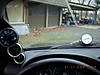


Blue hose is a refrigerant gauge, they screw up on the fitting just fine and can be used, just vent the hose when done to dry it, Woody
WEEKEND
Crossfires stumble at idle, pull codes if you have a concern, idle is low and may be odd.
Blue hose is a refrigerant gauge, they screw up on the fitting just fine and can be used, just vent the hose when done to dry it, Woody
WEEKEND

Forum Regular
Joined: Aug 2008
Posts: 689
Likes: 3
From: iowa.
Re: Replaced fuel pump: no more hard starting, still hesitant at idle, and some notes.
all the SRT's idle funky at a stoplight. jsut the way they are made. same deal with the diesel-ticking sound the engines make. totally normal.

Senior Member

Joined: Aug 2007
Posts: 2,280
Likes: 2
From: Albuquerque, NM
Re: Replaced fuel pump: no more hard starting, still hesitant at idle, and some notes
Mine idles funny when I stop, too. No other noticeable problems.
Originally Posted by j-fire
all the SRT's idle funky at a stoplight. jsut the way they are made. same deal with the diesel-ticking sound the engines make. totally normal.

Thread
Thread Starter
Forum
Replies
Last Post
Kodebuster
Wheels, Brakes, Tires and Suspension
12
Nov 5, 2020 04:06 PM
axnguyen
Cars For Sale - Archive
1
Jul 21, 2015 11:41 AM
ja.nko
Troubleshooting & Technical Questions & Modifications
4
Jul 10, 2015 03:21 PM
Currently Active Users Viewing This Thread: 1 (0 members and 1 guests)