


intake... just need some questions answered.


Thread Starter
Joined: Mar 2009
Posts: 68
Likes: 0
From: east cobb
 intake... just need some questions answered.
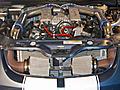
i installed a CAI on my car. it was just like needswings but not. lol. 3" piping, blah blah blah.
my pump is out. and it blows its fuse everytime i put a new one in.
while the information above is irrelevant,
my 0-60 time feels slower, my car feels slower in general with this intake on.
is this normal? is it actually slower? why?
my pump is out. and it blows its fuse everytime i put a new one in.
while the information above is irrelevant,
my 0-60 time feels slower, my car feels slower in general with this intake on.
is this normal? is it actually slower? why?

Senior Member
Joined: Sep 2007
Posts: 2,535
Likes: 4
From: AZ
Re: intake.... just need some questions answered.
Yes Needswings style are slower than real Needwings intake. Sell it and get your money back. Buy the real thing and if you have any issues at all you have unlimited access to Rob at all times of the day or night. Sorry to hear about your results. Make sure you don't have any air in the system.

Senior Member
Joined: Apr 2008
Posts: 2,665
Likes: 5
From: Orlando, FL
Re: intake.... just need some questions answered.
Sounds like you need to do a throttle body reset, which is a common problem after changing the intake. You should definitely notice an improvement over stock.
1. Get in your car
2. Turn the key to the on (not start) position, the position just before the starter
turns over.
3. Press the gas pedal to the floor with the key in the "on" position.
4. Hold the pedal to the floor for five seconds, then turn the key back
to the "off" position (don't remove the key), then release the gas
pedal.
5. Wait 2 mins. for a full alignment.
6. Drive the car as you always do.
1. Get in your car
2. Turn the key to the on (not start) position, the position just before the starter
turns over.
3. Press the gas pedal to the floor with the key in the "on" position.
4. Hold the pedal to the floor for five seconds, then turn the key back
to the "off" position (don't remove the key), then release the gas
pedal.
5. Wait 2 mins. for a full alignment.
6. Drive the car as you always do.
Last edited by Mimi05SRT6; Jun 24, 2009 at 05:45 AM.

Forum Regular
Joined: Jul 2007
Posts: 528
Likes: 0
Re: intake.... just need some questions answered.
Also if you don't take care of the I/C problem it doesn't matter what mods you have on the car it will definitely be slower than stock once it warms up.
As a rule of thumb BEFORE doing ANY mods to a car you should make sure your care is properly tuned, otherwise you are left to a lot of guessing with trouble shooting.
find the short/cause of the pump blowing the fuse - a wiring diagram would help and a good volt meter.
As a rule of thumb BEFORE doing ANY mods to a car you should make sure your care is properly tuned, otherwise you are left to a lot of guessing with trouble shooting.
find the short/cause of the pump blowing the fuse - a wiring diagram would help and a good volt meter.
 Re: intake... just need some questions answered.
Until you get your failed IC pump replaced and get your Supercharger back online - your STR6 will perform worse then a N/A Xfire. Regardless of any other mods you install.
Senior Member
Joined: Oct 2007
Posts: 1,271
Likes: 1
From: Great Falls, Montana ( Big Sky Country)
Re: intake... just need some questions answered.
I do really hope Cruzin is just joking about the non-NeedsWings intakes being slower...
Could anyone be that product namebrand conned?
Anyway have you tried to install the stocker to see if it actually feels stronger? A lot of times when we are modifying we expect alot more than we get and the mind does all kinds of things.
Generally even the sound change makes one think we is running faster than before.
It would cost you nothing but less than a half hours time to switch them back and forth.
Good luck...
Mike
Could anyone be that product namebrand conned?
Anyway have you tried to install the stocker to see if it actually feels stronger? A lot of times when we are modifying we expect alot more than we get and the mind does all kinds of things.
Generally even the sound change makes one think we is running faster than before.
It would cost you nothing but less than a half hours time to switch them back and forth.
Good luck...
Mike
Senior Member
Joined: Oct 2007
Posts: 1,271
Likes: 1
From: Great Falls, Montana ( Big Sky Country)
Re: intake... just need some questions answered.
I should have read the entire post, you have all kinds of things effecting your performance right now to ever assume it has anything to do with your intake...
Mike
Mike
Senior Member
Joined: Sep 2007
Posts: 2,535
Likes: 4
From: AZ
Re: intake... just need some questions answered.
Nope not kidding. NW intake is faster, albeit by just a few hundredths or a tenth of a second. Which most of you don't care about, but is the difference of winning or losing at the stripe. Heck even a half car at the stop light kills that are often posted. If a chrome coating or even powder coating was the yielding the best results then that's what the final product would be for Rob. He didn't stop there and kept testing and now will teflon coat the inside for maximum flow. They are the best and faster until a copycat can take the crown. Or as Waldig did and develop it one step better. Not name brand conned (I have an edelbrock on my nova and a holley on my camaro), just stick with whats the best and proven so far. Always looking to go faster, we'll see what comes to market. Not everyones cup of tea.
As for this member once he changes his pump I was saying to make sure there is no air in the system. Also he did ask if they were slower, just had to point that out.
As for this member once he changes his pump I was saying to make sure there is no air in the system. Also he did ask if they were slower, just had to point that out.
Forum Regular
Joined: Jul 2007
Posts: 528
Likes: 0
Re: intake... just need some questions answered.
Originally Posted by cruzinquick
Nope not kidding. NW intake is faster, albeit by just a few hundredths or a tenth of a second. Which most of you don't care about, but is the difference of winning or losing at the stripe. Heck even a half car at the stop light kills that are often posted. If a chrome coating or even powder coating was the yielding the best results then that's what the final product would be for Rob. He didn't stop there and kept testing and now will teflon coat the inside for maximum flow. They are the best and faster until a copycat can take the crown. Or as Waldig did and develop it one step better. Not name brand conned (I have an edelbrock on my nova and a holley on my camaro), just stick with whats the best and proven so far. Always looking to go faster, we'll see what comes to market. Not everyones cup of tea.
As for this member once he changes his pump I was saying to make sure there is no air in the system. Also he did ask if they were slower, just had to point that out.
As for this member once he changes his pump I was saying to make sure there is no air in the system. Also he did ask if they were slower, just had to point that out.
On being faster by "a few hundredths or a tenth of a second" - do we have DYNO SHEETS/TIME SLIPS that back this up? AND... not all the Needswings were Teflon Coated & there have never been any DYNO/TIMSLIPS comparing a Needswings CAI vs. Teflon Coated Needswings
On TEFLON COATING... this is BIG! Has anyone ever had a nonstick pan that was teflon coated? OR the actual question - Has anyone had a Teflon coated pan that DID NOT peel over time?
Now with the Teflon Coated inside the CAI - where do you think those peelings are going to go? They are going to end up in your engine
 The Heat cycles - getting warm/hot, cooling down/cold, repeat many many times on a daily basis will help the breakdown of Teflon and the peeling process.
...And now for the biggie
 polymer fume fever - Health concerns! Teflon emmits toxic fumes at different temps the really nasty ones happen at temps the intakes will never see - but they also begin at temps the CAI will see.
Here are the dyno/timslips(being sarcasitc) to back it up:
Teflon
Almost a Month and the Teflon Coating Continues to Peel | Newsflavor - this one really only uses Teflon Coating Peeling as a headline because Teflon Coating is so well known to peel.
Teflon linked to birth defects and illness; but is it safe to use in cooking? by Mike Adams the Health Ranger - health risks & Dupont accused of withholding info about Teflon & no response from Dupont
So....
Do your own research to assist you in making educated decissions (just as a General Principal)
* many people don't like look for info. themselves which is
why soooo many still believe that Jesus Christ was born
in December and that his birth was what changed the
calendar from using b.c. to a.d. - funny thing is that
it is WRITTEN in The Bible he was born between
Aug. and Oct. and probably the year 4 b.c.
* there are still 20, 30, 40... 90 year-olds that believe Dec. 25th is
Jesus Christ's Birthday
- should anyone read this and still believes Christ was born on Dec. 25th and the calendar was reset with his birth.... Pick up a Bible or do 5 min. of research on the Internet and see for yourself
 I went through 18 years of my life believing what other people told me - And then learned to look things up for myself.
And... what's not there - IS NOT THERE! Meaning if there is no inner coating - there is nothing to come off
Let's see:
Save $200+
No Engine Damage
No added health issue(s)
"might be"/unproven - be 1/10th slower
= pretty easy "Educated decision for me to make"
...sorry so long folks


Senior Member
Joined: Feb 2008
Posts: 4,508
Likes: 34
From: VA

 Re: intake... just need some questions answered.
I do not have a lot of faith in teflon coated intakes even though many do. THe coating has little to no effect on the air friction as the boundry layer of air (film layer ) does not move much and the air flow glides over it. The coating may do more to fill in pits like on a golf ball that cause turbulance and drag limiting flow. In this case paint would improve the numbers but that is not my deal one way or another.
I take exception with the BAD side of teflon. It was developed by accident and helped produce the big bomb.
It does not degrade in the intake manifold as there is no part of the manifold that ever sees 260 degrees centigrad and never will. THere will be no breakdown due to heat in the car even when heat soaking after a run. The bad rap is not deserved in my opinion and I wanted to come out to say so.
Iam doing some radical changes to the intake manifolds to increase flow by some 40%, which is my bet with Rob that I can do it. Tomorrow I will try for the NINTH time to get on a dyno per the schedule as I keep getting bumped for a wild list of reasons. My changes will have NO teflon and I see no reason for it, but the dyno numbers on my tenth dyno run will be posted for all to see.
Teflon is used in MANY medical applicances and non medical machines because of its STABILITY and temperature capabilities and I feel that it should be reviewed in the light of data. Included is the first listing of characteristics I pulled up for the crew to read about, it.
BTW if the teflon peels it will do nothing as the rotors of our superchargers have it on their working surfaces as sealing surfaces. It is not going to do anything to the rings or valves either, it is a lubricant in many ways as a solid and paste.
My $1.38 worth of comment, Ill go back to my non stick kitchen now. Oh yeah 260 c is about 500.00 degrees F...........
Did you know -40C is also -40F??????????That is where you old house R22 freon boils at sea level...
Woody
You can support Wikipedia by making a tax-deductible donation.
if (wgNotice != '') document.writeln(wgNotice);
Polytetrafluoroethylene
From Wikipedia, the free encyclopedia
(Redirected from Teflon)
Jump to: navigation, search
"Teflon" redirects here. For other uses, see Teflon (disambiguation).
Polytetrafluoroethylene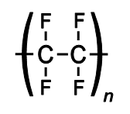
 IUPAC name
Systematic namePoly(tetrafluoroethylene)Other namesTeflon, Syncolon, PolytetrafluoroetheneIdentifiersAbbreviationsPTFECAS number[9002-84-0]PropertiesMolecular formulaCnF2n+2Density2200 kg/m3Melting point327 °C
Supplementary data pageStructure and
propertiesn, εr, etc.Thermodynamic
dataPhase behaviour
Solid, liquid, gasSpectral dataUV, IR, NMR, MSExcept where noted otherwise, data are given for
materials in their standard state
(at 25 °C, 100 kPa)
Infobox referencesIn chemistry, polytetrafluoroethylene (PTFE) is a synthetic fluoropolymer of tetrafluoroethylene which finds numerous applications. PTFE is most well known by the DuPont brand name Teflon.
PTFE is a fluorocarbon solid, as it is a high molecular weight compound consisting wholly of carbon and fluorine. Neither water and water-containing substances nor oil and oil-containing substances are wet by PTFE, as fluorocarbons demonstrate mitigated London dispersion forces due to the high electronegativity of fluorine.
PTFE is used as a non-stick coating for pans and other cookware. It is very non-reactive, partly because of the strength of carbon–fluorine bonds, and so it is often used in containers and pipework for reactive and corrosive chemicals. Where used as a lubricant, PTFE reduces friction, wear and energy consumption of machinery.
Contents
[hide]
[edit] History
PTFE was accidentally invented by Roy Plunkett of Kinetic Chemicals in 1938. While Plunkett was attempting to make a new CFC refrigerant, the perfluorethylene polymerized in its pressurized storage container, with the iron from the inside of the container acting as a catalyst. Kinetic Chemicals patented it in 1941[1] and registered the Teflon trademark in 1945.[2][3]
By 1950, DuPont had acquired interest in Kinetic Chemicals and was producing over a million pounds (450 tons) of Teflon per year in Parkersburg, West Virginia. In 1954, French engineer Marc Grégoire created the first pan coated with Teflon non-stick resin under the brandname of Tefal after his wife urged him to try the material he had been using on fishing tackle on her cooking pans.[4] In the United States, Kansas City, Missouri resident Marion A. Trozzolo, who had been using the substance on scientific utensils, marketed the first frying pan, "The Happy Pan," in 1961.[5]
An early advanced use was in the Manhattan Project as a material to coat valves and seals in the pipes holding highly reactive uranium hexafluoride in the vast uranium enrichment plant at Oak Ridge, Tennessee, when it was known as K-25.
[edit] Properties


PTFE is often used to coat non-stick frying pans as it is hydrophobic and possesses fairly high heat resistance.
PTFE is a white solid at room temperature, with a density of about 2.2 g/cm³. According to DuPont its melting point is 327 °C (620.6 °F), but its properties degrade above 260 °C (500 °F).[6] PTFE gains its properties from the aggregate effect of carbon-fluorine bonds, as do all fluorocarbons.
The coefficient of friction of plastics is usually measured against polished steel.[7] PTFE's coefficient of friction is 0.1 or less[6], which is the second lowest of any known solid material (diamond-like carbon being the first). PTFE's resistance to van der Waals forces means that it is the only known surface to which a gecko cannot stick[8], though it can still use the hairs on its feet like a spider to climb.
PTFE has excellent dielectric properties. This is especially true at high radio frequencies, making it suitable for use as an insulator in cables and connector assemblies and as a material for printed circuit boards used at microwave frequencies. Combined with its high melting temperature, this makes it the material of choice as a high-performance substitute for the weaker and lower melting point polyethylene that is commonly used in low-cost applications. Its extremely high bulk resistivity makes it an ideal material for fabricating long life electrets, useful devices that are the electrostatic analogues of magnets.
Because of its chemical inertness, PTFE cannot be cross-linked like an elastomer. Therefore it has no "memory," and is subject to creep, also known as "cold flow" and "compression set". A little bit of creep allows PTFE seals to conform to mating surfaces better than most other plastic seals. Too much creep, however, and the seal can be compromised. Compounding fillers control unwanted creep and improve wear, friction, and other properties. Sometimes metal springs apply continuous force to PTFE seals to give good contact, while permitting some creep.
Due to its low friction, it is used for applications where sliding action of parts is needed: bearings, bushings, gears, slide plates, etc. In these applications it performs significantly better than nylon and acetal; it is comparable to ultra high-molecular weight polyethylene (UHMWPE), although UHMWPE is more resistant to wear than Teflon. For these applications, versions of teflon with mineral oil or molybdenum disulfide embedded as additional lubricants in its matrix are being manufactured.
Gore-Tex is a material incorporating fluoropolymer membrane with micropores. The roof of the Hubert H. Humphrey Metrodome in Minneapolis is one of the largest applications of Teflon PTFE coatings on Earth, using 20 acres (81,000 m2) of the material in a double-layered, white dome, made with PTFE-coated fiberglass, that gives the stadium its distinctive appearance. The Millennium Dome in London is also substantially made of PTFE.
Powdered PTFE is used in pyrotechnic compositions as oxidizer together with powdered metals such as aluminium and magnesium. Upon ignition these mixtures form carbonaceous soot and the corresponding metal fluoride and release large amounts of heat. Hence they are used as infrared decoy flares and igniters for solid-fuel rocket propellants.[9]
PTFE is also used in body piercings, such as a sub-clavicle piercing, due to its flexibility and bio-compatibility.
In optical radiometry, sheets made from PTFE are used as measuring heads in spectroradiometers and broadband radiometers (e.g. illuminance meters and UV radiometers) due to its capability to diffuse a transmitting light nearly perfectly. Moreover, optical properties of PTFE stay constant over a wide range of wavelengths, from UV up to near infrared. In this region, the relation of its regular transmittance to diffuse transmittance is negligibly small so light transmitted through a diffuser (PTFE sheet) radiates like Lambert's cosine law. Thus, PTFE enables cosinusoidal angular response for a detector measuring the power of optical radiation at a surface, e.g., in solar irradiance measurements.
PTFE is also used to coat certain types of hardened, armor-piercing bullet, so as to reduce the amount of wear on the firearm's rifling. These are often referred to as "cop-killer" bullets by virtue of PTFE's supposed ability to ease a bullet's passage through body armor. However, this is simply an urban myth as PTFE has no effect in the bullet's ability to penetrate soft body armor, only on the ability to prevent damage to the weapon from firing very hard ammunition.
PTFE's low frictional properties have also been utilized as computer mice feet such as the Logitech G5 and Logitech G7 computer mice series from Logitech or most Razer gaming mice (e.g. the Deathadder, Lachesis). The low friction provided by PTFE allows the mice to be moved and glide across surfaces smoothly and with less effort.
PTFE's high corrosion resistance makes it ideal for laboratory environments as containers, magnetic stirrers and tubing for highly corrosive chemicals such as hydrofluoric acid, which will dissolve glass containers.
PTFE can be used as a thread seal tape in plumbing applications.
PTFE grafts can be used to bypass stenotic arteries in peripheral vascular disease, if a suitable autologous vein graft is not available.
PTFE can be used to prevent insects climbing up surfaces painted with the material. PTFE is so slippery that insects cannot get a grip and tend to fall off. For example PTFE is used to prevent ants climbing out of formicaria.
[edit] Safety
The pyrolysis of PTFE is detectable at 200 °C (392 °F), and it evolves several fluorocarbon gases and a sublimate. Animal studies indicate that it is highly unlikely that these products would be generated in amounts significant to health at temperatures below 250 °C (482 °F).[10] While PTFE is stable and non-toxic, it begins to deteriorate after the temperature of cookware reaches about 260 °C (500 °F), and decompose above 350 °C (660 °F).[11] These degradation products can be lethal to birds, and can cause flu-like symptoms in humans.[11]
Cooking fats, oils, and butter will begin to scorch and smoke at about 200 °C (392 °F), and meat is usually fried between 200–230 °C (400–450 °F), but empty cookware can exceed this temperature if left unattended on a hot burner.
A 1959 study (conducted before the U.S. Food and Drug Administration approved the material for use in food processing equipment) showed that the toxicity of fumes given off by the coated pan on dry heating was less than that of fumes given off by ordinary cooking oils.[12]
[edit] Carcinogens in production
The United States Environmental Protection Agency's scientific advisory board found in 2005 that perfluorooctanoic acid (PFOA), a chemical compound used to make Teflon, is a "likely carcinogen." This finding was part of a draft report that has yet to be made final.[13] DuPont settled for $300 million in a 2004 lawsuit filed by residents near its manufacturing plant in Ohio and West Virginia based on groundwater pollution from this chemical. Currently this chemical is not regulated by the EPA.
In January 2006, DuPont, the only company that manufactures PFOA in the US, agreed to eliminate releases of the chemical from its manufacturing plants by 2015,[14] but did not commit to completely phasing out its use of the chemical. This agreement is said to apply to not only PTFE used in cookware but also other products such as food packaging, clothing, and carpeting. DuPont also stated that it cannot produce PTFE without the use of the chemical PFOA, although it is looking for a substitute.
PFOA is used only during the manufacture of the product—only a trace amount of PFOA remains after the curing process. DuPont maintains that there should be no measurable amount of PFOA on a finished pan, provided that it has been properly cured.[15] A 2005 U.S. Food and Drug Administration (FDA) study detected PFOA in finished PTFE products including PTFE/Teflon cookware.[16] A February 2007 New York State Department of Health study detected PFOA in the gas phase coming from new nonstick cookware and microwave popcorn bags;[17] this research was funded by a 2005–2006 $17,700 grant from the Consumers Union.[18]
As of August 2008, the EPA's position was that it "has no information that routine use of household or other products using fluoropolymers, such as non-stick cookware or all weather clothing, poses a concern."[19]
[edit] Similar polymers

Teflon is also used as the trade name for a polymer with similar properties, perfluoroalkoxy polymer resin (PFA).
Other polymers with similar composition are also known by the Teflon name:They retain the useful properties of PTFE of low friction and non-reactivity, but are more easily formable. FEP is softer than PTFE and melts at 260 °C; it is highly transparent and resistant to sunlight.[20]
[edit] See also
[edit] Footnotes
[edit] References
[edit] External links
Other plasticizersOrganophosphates · Adipate-based (DEHA · DOA)
MonomersBisphenol A (in Polycarbonates) · Vinyl chloride (in PVC)
Other additives incl. PHC'sPBDEs · PCBs · Organotins · PFCs
Health issuesTeratogen · Carcinogen · Endocrine disruptor · Diabetes · Obesity
MiscellaneousPVC · Plastic recycling · Plastic bottle · Vinyl chloride · Dioxins · Polystyrene · Styrofoam · PTFE (Teflon) · California Proposition 65 (1986) · List of environmental health hazards · Persistent organic pollutant · European REACH regulation (2006) · Japan Toxic Substances Law · Toxic Substances Control Act
[show] E.I. du Pont de Nemours and Company (DuPont)Corporate Directors:Samuel Bodman · Richard H. Brown · Robert A. Brown · Bertrand P. Collomb · Curtis J. Crawford · Alexander M. Cutler · There du Pont · John T. Dillon · Marillyn Hewson · Charles O. Holliday · Lois Juliber · Ellen J. Kullman · William K. Reilly
Products:Corian · FE-13 · Hypalon · Kalrez · Kapton · Kevlar · Mylar · Neoprene · Nomex · Nylon · Sorona · Teflon · Tyvek · Zodiaq · Zytel
Subsidiaries and joint ventures:Pioneer Hi-Bred · Solae · DuPont Danisco
Divisions and facilities:DuPont Building · DuPont Central Research · DuPont Experimental Station
Notable people:Eleuthère Irénée du Pont · Alfred I. du Pont · Eugene du Pont · Francis Gurney du Pont · Francis Irénée du Pont · Lammot du Pont · Pierre S. du Pont · Donaldson Brown · Wallace Carothers · Uma Chowdhry · Thomas M. Connelly · Linda Fisher · Steven Ittel · Stephanie Kwolek · Rudolph Pariser · George Parshall · Roy J. Plunkett · John J. Raskob · Irving S. Shapiro · Joseph Shivers · Howard Ensign Simmons, Jr. · Charles Stine · Nathaniel C. Wyeth
HistoryEleutherian Mills · E. I du Pont de Nemours Company · Hercules Powder Company · Atlas Chemical Industries · B Reactor (Manhattan Project) · Remington Arms · Savannah River Site · Kinetic Chemicals · Conoco Inc. · Consolidation Coal Company
Annual Revenue: $27.3 billion USD (▲1.3% FY 2004) · Employees: 60,000 ·
Stock Symbol: Preferred stock: NYSE: DDPRA, NYSE: DDPRB Common stock: NYSE: DD · Website: www.dupont.com[show] PlasticsCross-linked polyethylene (PEX or XLPE) · Polyethylene (PE) · Polyethylene terephthalate (PET or PETE) · Polyphenyl ether (PPE) · Polyvinyl chloride (PVC) · Polyvinylidene chloride (PVDC) · Polylactic acid (PLA) · Polypropylene (PP) · Polybutylene (PB) · Polybutylene terephthalate (PBT) · Polyamide (PA) · Polyimide (PI) · Polycarbonate (PC) · Polytetrafluoroethylene (PTFE) · Polystyrene (PS) · Polyurethane (PU) · Polyester (PEs) · Acrylonitrile butadiene styrene (ABS) · Polymethyl methacrylate (PMMA) · Polyoxymethylene (POM) · Polysulfone (PES) · Styrene-acrylonitrile (SAN) · Ethylene vinyl acetate (EVA)) · Styrene maleic anhydride (SMA)
Retrieved from "http://en.wikipedia.org/wiki/Polytetrafluoroethylene"
Categories: Fluorocarbons | Plastics | Fluoropolymers | Dry lubricants | DuPont | Dielectrics | Pyrotechnic oxidizers | DuPont products
Views
Personal tools
if (window.isMSIE55) fixalpha(); Navigation
Search
Interaction
Toolbox
Languages


if (window.runOnloadHook) runOnloadHook();
I take exception with the BAD side of teflon. It was developed by accident and helped produce the big bomb.
It does not degrade in the intake manifold as there is no part of the manifold that ever sees 260 degrees centigrad and never will. THere will be no breakdown due to heat in the car even when heat soaking after a run. The bad rap is not deserved in my opinion and I wanted to come out to say so.
Iam doing some radical changes to the intake manifolds to increase flow by some 40%, which is my bet with Rob that I can do it. Tomorrow I will try for the NINTH time to get on a dyno per the schedule as I keep getting bumped for a wild list of reasons. My changes will have NO teflon and I see no reason for it, but the dyno numbers on my tenth dyno run will be posted for all to see.
Teflon is used in MANY medical applicances and non medical machines because of its STABILITY and temperature capabilities and I feel that it should be reviewed in the light of data. Included is the first listing of characteristics I pulled up for the crew to read about, it.
BTW if the teflon peels it will do nothing as the rotors of our superchargers have it on their working surfaces as sealing surfaces. It is not going to do anything to the rings or valves either, it is a lubricant in many ways as a solid and paste.
My $1.38 worth of comment, Ill go back to my non stick kitchen now. Oh yeah 260 c is about 500.00 degrees F...........
Did you know -40C is also -40F??????????That is where you old house R22 freon boils at sea level...
Woody
You can support Wikipedia by making a tax-deductible donation.
if (wgNotice != '') document.writeln(wgNotice);
Polytetrafluoroethylene
From Wikipedia, the free encyclopedia
(Redirected from Teflon)
Jump to: navigation, search
"Teflon" redirects here. For other uses, see Teflon (disambiguation).
Polytetrafluoroethylene

 IUPAC name
 [show]
Poly(tetrafluoroethene)
Poly(tetrafluoroethene)
Systematic namePoly(tetrafluoroethylene)Other namesTeflon, Syncolon, PolytetrafluoroetheneIdentifiersAbbreviationsPTFECAS number[9002-84-0]PropertiesMolecular formulaCnF2n+2Density2200 kg/m3Melting point327 °C
Supplementary data pageStructure and
propertiesn, εr, etc.Thermodynamic
dataPhase behaviour
Solid, liquid, gasSpectral dataUV, IR, NMR, MSExcept where noted otherwise, data are given for
materials in their standard state
(at 25 °C, 100 kPa)
Infobox referencesIn chemistry, polytetrafluoroethylene (PTFE) is a synthetic fluoropolymer of tetrafluoroethylene which finds numerous applications. PTFE is most well known by the DuPont brand name Teflon.
PTFE is a fluorocarbon solid, as it is a high molecular weight compound consisting wholly of carbon and fluorine. Neither water and water-containing substances nor oil and oil-containing substances are wet by PTFE, as fluorocarbons demonstrate mitigated London dispersion forces due to the high electronegativity of fluorine.
PTFE is used as a non-stick coating for pans and other cookware. It is very non-reactive, partly because of the strength of carbon–fluorine bonds, and so it is often used in containers and pipework for reactive and corrosive chemicals. Where used as a lubricant, PTFE reduces friction, wear and energy consumption of machinery.
Contents
[hide]
- [*]
[edit] History
PTFE was accidentally invented by Roy Plunkett of Kinetic Chemicals in 1938. While Plunkett was attempting to make a new CFC refrigerant, the perfluorethylene polymerized in its pressurized storage container, with the iron from the inside of the container acting as a catalyst. Kinetic Chemicals patented it in 1941[1] and registered the Teflon trademark in 1945.[2][3]
By 1950, DuPont had acquired interest in Kinetic Chemicals and was producing over a million pounds (450 tons) of Teflon per year in Parkersburg, West Virginia. In 1954, French engineer Marc Grégoire created the first pan coated with Teflon non-stick resin under the brandname of Tefal after his wife urged him to try the material he had been using on fishing tackle on her cooking pans.[4] In the United States, Kansas City, Missouri resident Marion A. Trozzolo, who had been using the substance on scientific utensils, marketed the first frying pan, "The Happy Pan," in 1961.[5]
An early advanced use was in the Manhattan Project as a material to coat valves and seals in the pipes holding highly reactive uranium hexafluoride in the vast uranium enrichment plant at Oak Ridge, Tennessee, when it was known as K-25.
[edit] Properties

PTFE is often used to coat non-stick frying pans as it is hydrophobic and possesses fairly high heat resistance.
PTFE is a white solid at room temperature, with a density of about 2.2 g/cm³. According to DuPont its melting point is 327 °C (620.6 °F), but its properties degrade above 260 °C (500 °F).[6] PTFE gains its properties from the aggregate effect of carbon-fluorine bonds, as do all fluorocarbons.
The coefficient of friction of plastics is usually measured against polished steel.[7] PTFE's coefficient of friction is 0.1 or less[6], which is the second lowest of any known solid material (diamond-like carbon being the first). PTFE's resistance to van der Waals forces means that it is the only known surface to which a gecko cannot stick[8], though it can still use the hairs on its feet like a spider to climb.
PTFE has excellent dielectric properties. This is especially true at high radio frequencies, making it suitable for use as an insulator in cables and connector assemblies and as a material for printed circuit boards used at microwave frequencies. Combined with its high melting temperature, this makes it the material of choice as a high-performance substitute for the weaker and lower melting point polyethylene that is commonly used in low-cost applications. Its extremely high bulk resistivity makes it an ideal material for fabricating long life electrets, useful devices that are the electrostatic analogues of magnets.
Because of its chemical inertness, PTFE cannot be cross-linked like an elastomer. Therefore it has no "memory," and is subject to creep, also known as "cold flow" and "compression set". A little bit of creep allows PTFE seals to conform to mating surfaces better than most other plastic seals. Too much creep, however, and the seal can be compromised. Compounding fillers control unwanted creep and improve wear, friction, and other properties. Sometimes metal springs apply continuous force to PTFE seals to give good contact, while permitting some creep.
Due to its low friction, it is used for applications where sliding action of parts is needed: bearings, bushings, gears, slide plates, etc. In these applications it performs significantly better than nylon and acetal; it is comparable to ultra high-molecular weight polyethylene (UHMWPE), although UHMWPE is more resistant to wear than Teflon. For these applications, versions of teflon with mineral oil or molybdenum disulfide embedded as additional lubricants in its matrix are being manufactured.
Gore-Tex is a material incorporating fluoropolymer membrane with micropores. The roof of the Hubert H. Humphrey Metrodome in Minneapolis is one of the largest applications of Teflon PTFE coatings on Earth, using 20 acres (81,000 m2) of the material in a double-layered, white dome, made with PTFE-coated fiberglass, that gives the stadium its distinctive appearance. The Millennium Dome in London is also substantially made of PTFE.
Powdered PTFE is used in pyrotechnic compositions as oxidizer together with powdered metals such as aluminium and magnesium. Upon ignition these mixtures form carbonaceous soot and the corresponding metal fluoride and release large amounts of heat. Hence they are used as infrared decoy flares and igniters for solid-fuel rocket propellants.[9]
PTFE is also used in body piercings, such as a sub-clavicle piercing, due to its flexibility and bio-compatibility.
In optical radiometry, sheets made from PTFE are used as measuring heads in spectroradiometers and broadband radiometers (e.g. illuminance meters and UV radiometers) due to its capability to diffuse a transmitting light nearly perfectly. Moreover, optical properties of PTFE stay constant over a wide range of wavelengths, from UV up to near infrared. In this region, the relation of its regular transmittance to diffuse transmittance is negligibly small so light transmitted through a diffuser (PTFE sheet) radiates like Lambert's cosine law. Thus, PTFE enables cosinusoidal angular response for a detector measuring the power of optical radiation at a surface, e.g., in solar irradiance measurements.
PTFE is also used to coat certain types of hardened, armor-piercing bullet, so as to reduce the amount of wear on the firearm's rifling. These are often referred to as "cop-killer" bullets by virtue of PTFE's supposed ability to ease a bullet's passage through body armor. However, this is simply an urban myth as PTFE has no effect in the bullet's ability to penetrate soft body armor, only on the ability to prevent damage to the weapon from firing very hard ammunition.
PTFE's low frictional properties have also been utilized as computer mice feet such as the Logitech G5 and Logitech G7 computer mice series from Logitech or most Razer gaming mice (e.g. the Deathadder, Lachesis). The low friction provided by PTFE allows the mice to be moved and glide across surfaces smoothly and with less effort.
PTFE's high corrosion resistance makes it ideal for laboratory environments as containers, magnetic stirrers and tubing for highly corrosive chemicals such as hydrofluoric acid, which will dissolve glass containers.
PTFE can be used as a thread seal tape in plumbing applications.
PTFE grafts can be used to bypass stenotic arteries in peripheral vascular disease, if a suitable autologous vein graft is not available.
PTFE can be used to prevent insects climbing up surfaces painted with the material. PTFE is so slippery that insects cannot get a grip and tend to fall off. For example PTFE is used to prevent ants climbing out of formicaria.
[edit] Safety
The pyrolysis of PTFE is detectable at 200 °C (392 °F), and it evolves several fluorocarbon gases and a sublimate. Animal studies indicate that it is highly unlikely that these products would be generated in amounts significant to health at temperatures below 250 °C (482 °F).[10] While PTFE is stable and non-toxic, it begins to deteriorate after the temperature of cookware reaches about 260 °C (500 °F), and decompose above 350 °C (660 °F).[11] These degradation products can be lethal to birds, and can cause flu-like symptoms in humans.[11]
Cooking fats, oils, and butter will begin to scorch and smoke at about 200 °C (392 °F), and meat is usually fried between 200–230 °C (400–450 °F), but empty cookware can exceed this temperature if left unattended on a hot burner.
A 1959 study (conducted before the U.S. Food and Drug Administration approved the material for use in food processing equipment) showed that the toxicity of fumes given off by the coated pan on dry heating was less than that of fumes given off by ordinary cooking oils.[12]
[edit] Carcinogens in production
The United States Environmental Protection Agency's scientific advisory board found in 2005 that perfluorooctanoic acid (PFOA), a chemical compound used to make Teflon, is a "likely carcinogen." This finding was part of a draft report that has yet to be made final.[13] DuPont settled for $300 million in a 2004 lawsuit filed by residents near its manufacturing plant in Ohio and West Virginia based on groundwater pollution from this chemical. Currently this chemical is not regulated by the EPA.
In January 2006, DuPont, the only company that manufactures PFOA in the US, agreed to eliminate releases of the chemical from its manufacturing plants by 2015,[14] but did not commit to completely phasing out its use of the chemical. This agreement is said to apply to not only PTFE used in cookware but also other products such as food packaging, clothing, and carpeting. DuPont also stated that it cannot produce PTFE without the use of the chemical PFOA, although it is looking for a substitute.
PFOA is used only during the manufacture of the product—only a trace amount of PFOA remains after the curing process. DuPont maintains that there should be no measurable amount of PFOA on a finished pan, provided that it has been properly cured.[15] A 2005 U.S. Food and Drug Administration (FDA) study detected PFOA in finished PTFE products including PTFE/Teflon cookware.[16] A February 2007 New York State Department of Health study detected PFOA in the gas phase coming from new nonstick cookware and microwave popcorn bags;[17] this research was funded by a 2005–2006 $17,700 grant from the Consumers Union.[18]
As of August 2008, the EPA's position was that it "has no information that routine use of household or other products using fluoropolymers, such as non-stick cookware or all weather clothing, poses a concern."[19]
[edit] Similar polymers

Teflon is also used as the trade name for a polymer with similar properties, perfluoroalkoxy polymer resin (PFA).
Other polymers with similar composition are also known by the Teflon name:They retain the useful properties of PTFE of low friction and non-reactivity, but are more easily formable. FEP is softer than PTFE and melts at 260 °C; it is highly transparent and resistant to sunlight.[20]
[edit] See also
[edit] Footnotes
- [*]
[edit] References
- Ellis, D.A.; Mabury, S.A.; Martin, J.W.; Muir, D.C.G. (2001). "Thermolysis of fluoropolymers as a potential source of halogenated organic acids in the environment". Nature 412 (6844): 321–324. doi:10.1038/35085548.
[edit] External links
- DuPont (2005). Teflon News and Information. Retrieved 7 October 2005.
- Plasma Processes and Adhesive Bonding of Polytetrafluoroethylene
Other plasticizersOrganophosphates · Adipate-based (DEHA · DOA)
MonomersBisphenol A (in Polycarbonates) · Vinyl chloride (in PVC)
Other additives incl. PHC'sPBDEs · PCBs · Organotins · PFCs
Health issuesTeratogen · Carcinogen · Endocrine disruptor · Diabetes · Obesity
MiscellaneousPVC · Plastic recycling · Plastic bottle · Vinyl chloride · Dioxins · Polystyrene · Styrofoam · PTFE (Teflon) · California Proposition 65 (1986) · List of environmental health hazards · Persistent organic pollutant · European REACH regulation (2006) · Japan Toxic Substances Law · Toxic Substances Control Act
[show] E.I. du Pont de Nemours and Company (DuPont)Corporate Directors:Samuel Bodman · Richard H. Brown · Robert A. Brown · Bertrand P. Collomb · Curtis J. Crawford · Alexander M. Cutler · There du Pont · John T. Dillon · Marillyn Hewson · Charles O. Holliday · Lois Juliber · Ellen J. Kullman · William K. Reilly
Products:Corian · FE-13 · Hypalon · Kalrez · Kapton · Kevlar · Mylar · Neoprene · Nomex · Nylon · Sorona · Teflon · Tyvek · Zodiaq · Zytel
Subsidiaries and joint ventures:Pioneer Hi-Bred · Solae · DuPont Danisco
Divisions and facilities:DuPont Building · DuPont Central Research · DuPont Experimental Station
Notable people:Eleuthère Irénée du Pont · Alfred I. du Pont · Eugene du Pont · Francis Gurney du Pont · Francis Irénée du Pont · Lammot du Pont · Pierre S. du Pont · Donaldson Brown · Wallace Carothers · Uma Chowdhry · Thomas M. Connelly · Linda Fisher · Steven Ittel · Stephanie Kwolek · Rudolph Pariser · George Parshall · Roy J. Plunkett · John J. Raskob · Irving S. Shapiro · Joseph Shivers · Howard Ensign Simmons, Jr. · Charles Stine · Nathaniel C. Wyeth
HistoryEleutherian Mills · E. I du Pont de Nemours Company · Hercules Powder Company · Atlas Chemical Industries · B Reactor (Manhattan Project) · Remington Arms · Savannah River Site · Kinetic Chemicals · Conoco Inc. · Consolidation Coal Company
Annual Revenue: $27.3 billion USD (▲1.3% FY 2004) · Employees: 60,000 ·
Stock Symbol: Preferred stock: NYSE: DDPRA, NYSE: DDPRB Common stock: NYSE: DD · Website: www.dupont.com[show] PlasticsCross-linked polyethylene (PEX or XLPE) · Polyethylene (PE) · Polyethylene terephthalate (PET or PETE) · Polyphenyl ether (PPE) · Polyvinyl chloride (PVC) · Polyvinylidene chloride (PVDC) · Polylactic acid (PLA) · Polypropylene (PP) · Polybutylene (PB) · Polybutylene terephthalate (PBT) · Polyamide (PA) · Polyimide (PI) · Polycarbonate (PC) · Polytetrafluoroethylene (PTFE) · Polystyrene (PS) · Polyurethane (PU) · Polyester (PEs) · Acrylonitrile butadiene styrene (ABS) · Polymethyl methacrylate (PMMA) · Polyoxymethylene (POM) · Polysulfone (PES) · Styrene-acrylonitrile (SAN) · Ethylene vinyl acetate (EVA)) · Styrene maleic anhydride (SMA)
Retrieved from "http://en.wikipedia.org/wiki/Polytetrafluoroethylene"
Categories: Fluorocarbons | Plastics | Fluoropolymers | Dry lubricants | DuPont | Dielectrics | Pyrotechnic oxidizers | DuPont products
Views
- [*]
Personal tools
if (window.isMSIE55) fixalpha(); Navigation
- [*]
Search
Interaction
- [*]
Toolbox
- [*]
Languages
- [*]
- [*]
if (window.runOnloadHook) runOnloadHook();
Last edited by waldig; Jun 24, 2009 at 05:37 PM.
Senior Member
Joined: Sep 2007
Posts: 2,535
Likes: 4
From: AZ
Re: intake... just need some questions answered.
I liked Waldig's post better than your's SVO. Looks more original. I'll post some timeslips up this winter with single and dual testing. I'd be more than glad to run yours as well. Just send me one at that time and I'll give it a fair comparison. I don't recall anyone posting any timeslips even close to my times with your CAI yet. My times are with a single CAI not a dual in case your wondering. Probably will be around November when it cools down.
Forum Regular
Joined: Jul 2007
Posts: 528
Likes: 0
Re: intake... just need some questions answered.
Originally Posted by cruzinquick
I liked Waldig's post better than your's SVO. Looks more original. I'll post some timeslips up this winter with single and dual testing. I'd be more than glad to run yours as well. Just send me one at that time and I'll give it a fair comparison. I don't recall anyone posting any timeslips even close to my times with your CAI yet. My times are with a single CAI not a dual in case your wondering. Probably will be around November when it cools down.
...so then how did you come up with
"Yes Needswings style are slower than real Needwings intake. Sell it and get your money back. Buy the real thing and if you have any issues at all you have unlimited access to Rob at all times of the day or night. Sorry to hear about your results. Make sure you don't have any air in the system."
And really 1/10th of a second - anyone who knows anything about racing know that 1/10th of a second can be reaction time, weather conditions, different altitudes, etc... Oh, wait I forgot - you mentioned there are no timeslips to even back that up.
Honestly I'm very surprised and disappointed in you cruzinquick since you were the first to respond to this thread and did not direct special_kxoxo to focus on that I/C pump.
Analogy:
If a person shoes up in the emergency bleeding I don't think a doctor would begin discussing which bandages stick better - I would hope they'd focus on the actual wound.
...but then again there are malpractice lawsuits all the time - Cruzinquick I guess it's a good thing you don't practice medicine
Senior Member
Joined: Sep 2007
Posts: 2,535
Likes: 4
From: AZ
Re: intake... just need some questions answered.
SVO I was just messing with you, but my offer does stand for the comparison. I could do it right now in the summer but the DA is too inconsistent two make it fair. I would do a track day and cool the car in between runs and make passes within 50' DA differences between passes. I can't control the weather, but do know the patterns here enough that I will get to different times of the day when the DA will be the same. Reaction times don't have anything to do with elapsed times, but launch and traction do. I am very, very consistent with my launches. I've have made runs back to back within 1 hundredth of a second apart. Remind me this winter and you can send me one for the testing. I'll return when I'm done.
Actually I was trying to get Montana started since I'm visiting yellowstone in a few weeks. He didn't bite.
Actually I was trying to get Montana started since I'm visiting yellowstone in a few weeks. He didn't bite.
Last edited by cruzinquick; Jun 24, 2009 at 07:03 PM.

Senior Member
Joined: Jan 2007
Posts: 2,761
Likes: 194
From: Michigan
Re: intake... just need some questions answered.
check your IC pump, if its not running that needs to be address first, if it keep blowing fuses you will want to check all the wiring for an open contact.
this probably isnt the place or time for this but here goes...
i would check the materials used in the "copies" of our kits, every copy i have seen has used inferior materials and i see several potential problems with them that could very potentially cause severe problems. i will keep those problems to myself as they can/should try and do their own r&d instead of just trying to duplicate our systems (or maybe they are uncapable of seeing these problems as they were uncapable of designing something original from the start instead of buying one of our kits and trying to cookie cut a copy of it - albiet incorrectly). i wonder why everyone copying our stuff refuses to become a forum sponsor???? they can play hide and seak and try to "pm sell" things to our members but refuse to give back to the site and contribute to keep it up and running. oh, and why was the same Dan that ripped off everyone on the side skirts also selling the rip-off cai kits? is he and the member making the copy cai kits one in the same??
as for the teflon coating we use, it is not the same as cooking ware coating and does not flake off like your frying pan, nor is it scrapped against with a metal spatula continuosly at 400f. no need to worry about the coating.
this probably isnt the place or time for this but here goes...
i would check the materials used in the "copies" of our kits, every copy i have seen has used inferior materials and i see several potential problems with them that could very potentially cause severe problems. i will keep those problems to myself as they can/should try and do their own r&d instead of just trying to duplicate our systems (or maybe they are uncapable of seeing these problems as they were uncapable of designing something original from the start instead of buying one of our kits and trying to cookie cut a copy of it - albiet incorrectly). i wonder why everyone copying our stuff refuses to become a forum sponsor???? they can play hide and seak and try to "pm sell" things to our members but refuse to give back to the site and contribute to keep it up and running. oh, and why was the same Dan that ripped off everyone on the side skirts also selling the rip-off cai kits? is he and the member making the copy cai kits one in the same??
as for the teflon coating we use, it is not the same as cooking ware coating and does not flake off like your frying pan, nor is it scrapped against with a metal spatula continuosly at 400f. no need to worry about the coating.

Senior Member

Joined: Dec 2007
Posts: 1,366
Likes: 1
From: Mn
Re: intake... just need some questions answered.
Teflon is wonderful stuff,
Fifty years ago 3M added it to our water table,
Constipation is a thing of the past.
We all have Teflon coated exits.
Fifty years ago 3M added it to our water table,
Constipation is a thing of the past.
We all have Teflon coated exits.

Thread
Thread Starter
Forum
Replies
Last Post
jimf
Troubleshooting & Technical Questions & Modifications
11
Oct 10, 2015 10:22 AM
2005 Ragtop
Wheels, Brakes, Tires and Suspension
7
Oct 3, 2015 03:01 PM
Currently Active Users Viewing This Thread: 1 (0 members and 1 guests)